

BSG Home
Geomorphology - BSG
10


Glacial Erosion Landforms (Large-scale)

These are landforms created by the erosive action of glacial ice. It can be useful to divide these features on the basis of size into (a) large-scale, (b) medium-scale and (c) small-scale landforms.  

Large-scale
Medium-scale
Small-scale
Click to enlarge
Click to enlarge
Click to enlarge


Large-scale

Cirques

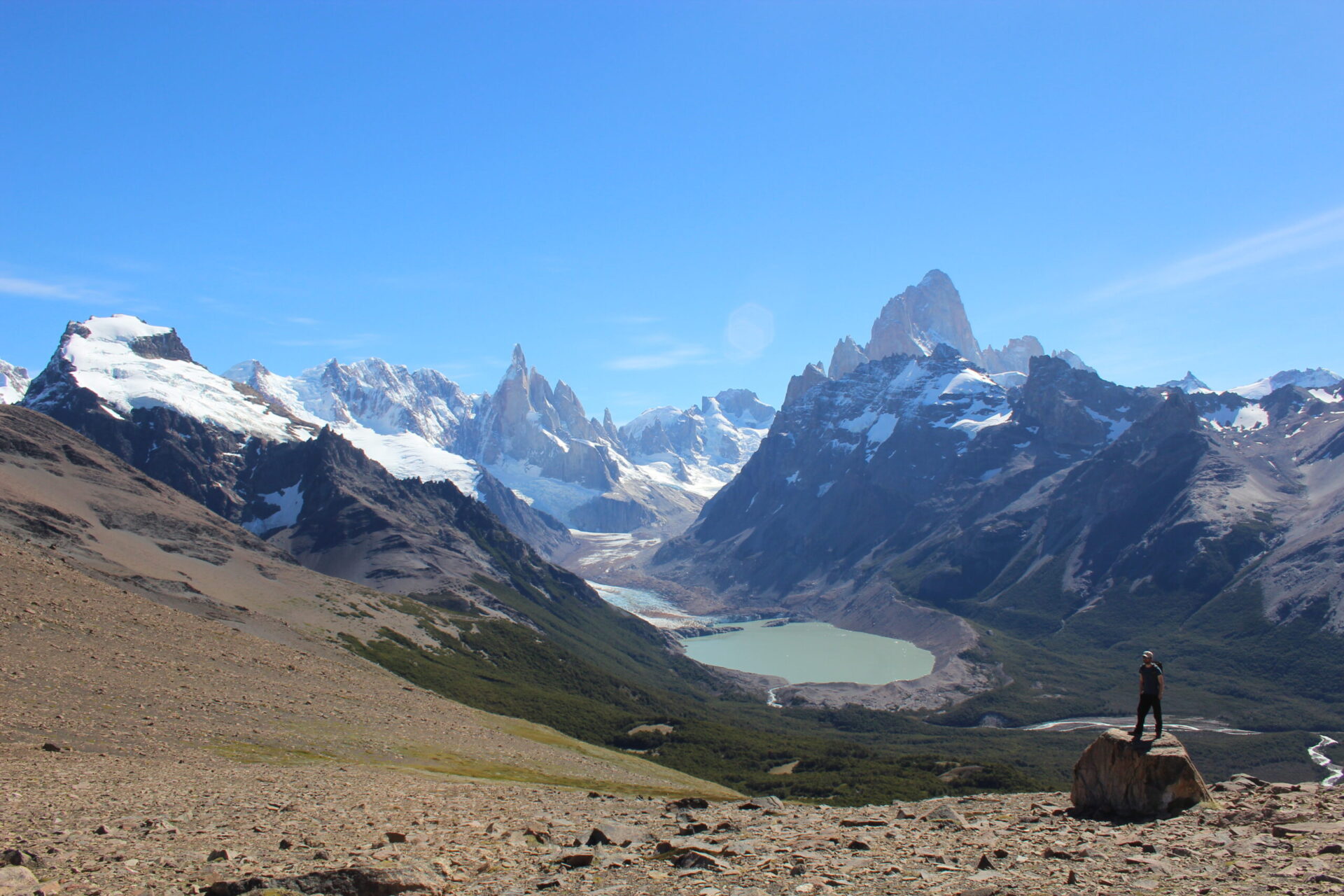
Cirques are one of the most distinctive landforms in glaciated uplands (Photo). They consist of an armchair-shaped hollow with 3 distinctive topographic features:

  • steep headwall and lateral flanks
  • over-deepened basin floor
  • small rock lip or moraine ridge at the open end

They range in size from depressions that are 100m deep and several hundred metres wide (Photo) to spectacular basins with headwalls over 1000m in height. (Photo)

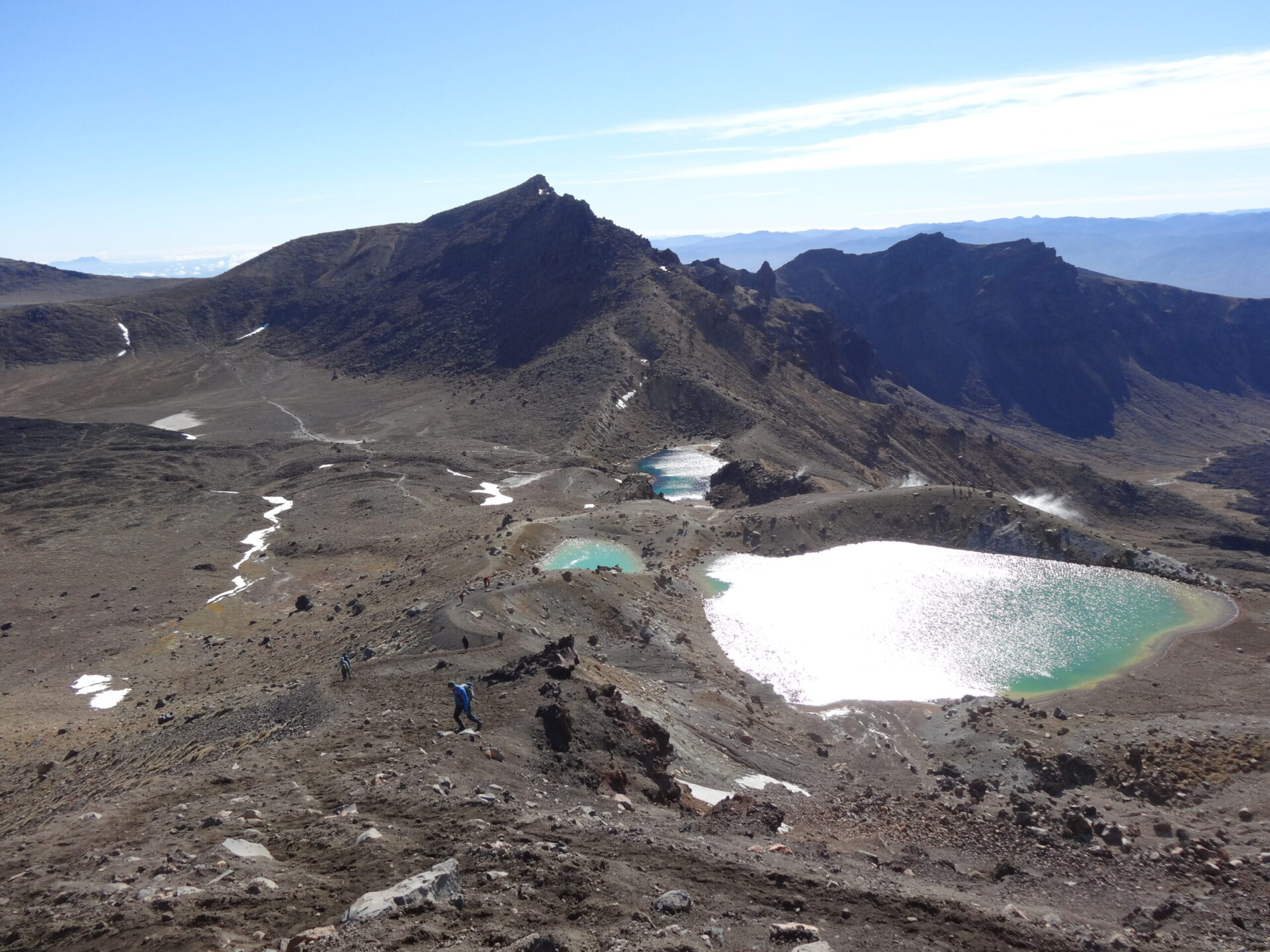
The formation of cirque basins begins with the development of a topographic hollow beneath a premanant snow patch or firnbank. This is progressively enlarged by nivation processes, which involve frost shattering of bedrock at the base of the firnbank and the removal of weathered debris by meltwater. Eventually, the hollow becomes deep enough to allow a sufficient thickness of firn to compress the lower layers into glacial ice, which then begins to flow downhill. Once movement occurs erosion increases significantly by a combination of headwall plucking and basin floor abrasion. (Fig) Unlike other types of glaciers, cirque glaciers move by a process of rotational sliding, this process is initiated by the steepness of the headwall and causes over-deepening of the basin floor. At the glacier snout where the thin ice limits glacial erosion, a rock lip develops which usually exhibits a patchy cover of till or a small moraine ridge (Photo). These features often act as a natural barrier to surface drainage within the basin and dam a small lake, called a tarn in the English Lake District. (Photo) The removal of large blocks of bedrock from the headwall by plucking maintains its steepness and jagged appearance.


Overtime, progressive headwall erosion allows cirque glaciers to cut backwards into an upland plateau. Cirque growth may eventually progress to the point where two adjacent headwalls are only separated by a narrow ridge called an arete, such as Striding Edge and Swirral Edge on Helvellyn in the Lake District (Photo). Where three or four cirques converge, a steep-sided pyramidal peak or horn develops (Photo). Classic examples of pyramidal peaks, such as K2 in the Karakoram Mountains are restricted to high altitude mountain ranges.

Photo Mont Blanc
Click to enlarge


In the mountains of the British Isles, the vast majority of cirque basins are orientated between the north west (315o) and south east (135o), this preferred orientation occurs in response to two environmental factors.

  1. North facing slopes receive less insolation than south facing slopes, and therefore are colder, hence, glaciers are more likely to form and survive for longer.
  2. During the Ice Age the principal source of snow-bearing winds were westerly airstreams, therefore, basins on the more sheltered eastern side of mountains acted as natural traps for snow.           


Glacial Valleys

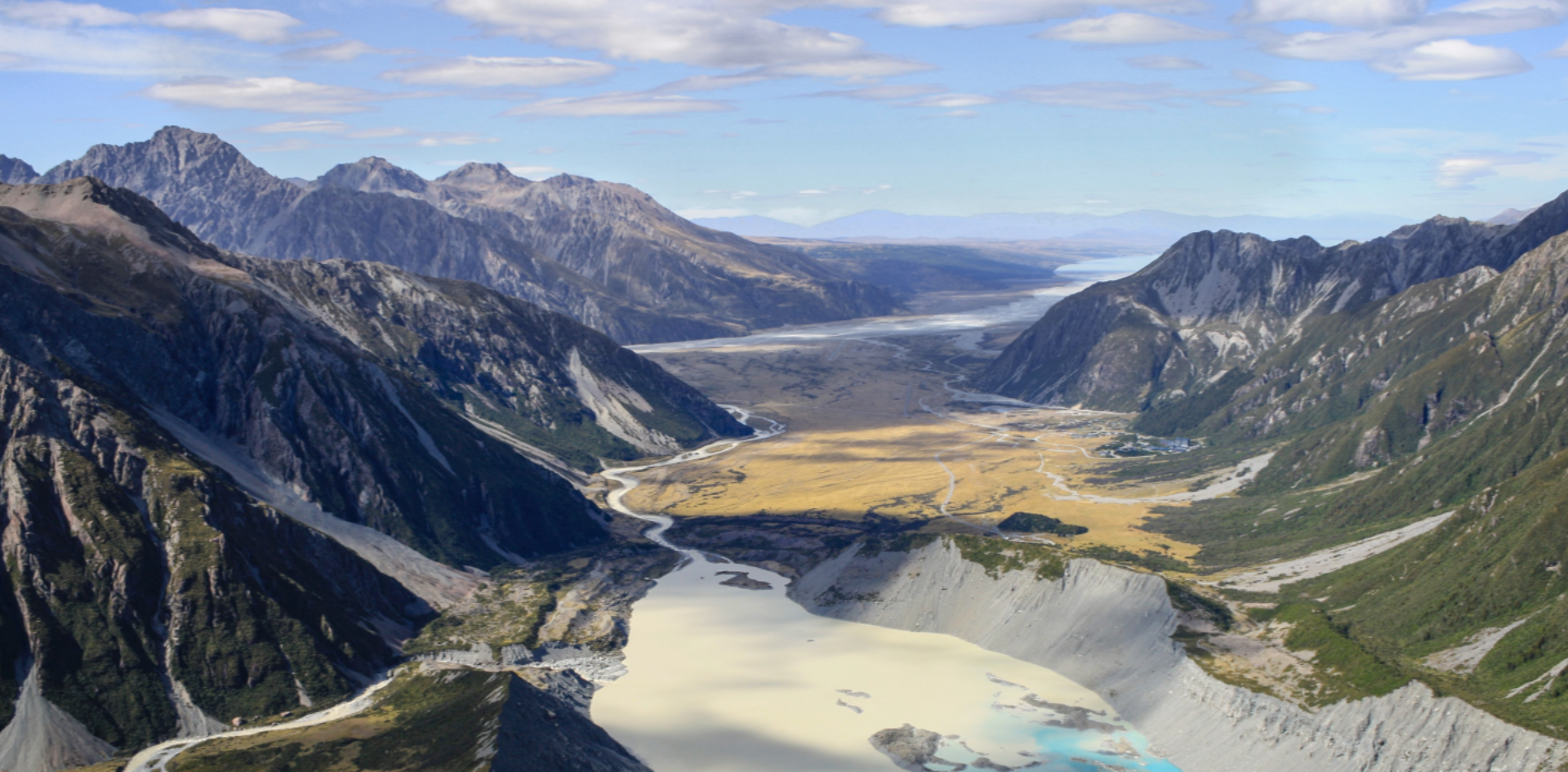
These are the most spectacular and important landforms in glaciated regions (Photo). They consist of steep-sided troughs between mountains and are formed by the erosive action of valley glaciers (Photo). Their dimensions vary greatly from the modest features, several hundred metres deep, in upland parts of Britain and Ireland (Photo) to the massive troughs of the Himalayas/Karakoram, which are several thousand metres deep (Photo). The formation of glacial valleys commences as ice from an ice cap or cirque glacier spills into a pre-existing river valley. Glacial erosion then widens and deepens the initial V-shaped valley into the characteristic U-shape of glacial valleys (Photo). The valley is also straightened by the removal of inter-locking spurs to form truncated spurs (Photo). This occurs because glaciers are rigid bodies and are less able to negotiate river bends in the same manner of flowing water. Furthermore, lowering of the valley floor leads to the truncation of tributary rivers and the formation of hanging valleys (Photo).

The floor of a glacial valley often exhibits irregularities consisting of rock bars and rock basins. These features are generally considered to reflect changing rates of erosion. For instance, rock bars usually comprise rock that is more resistant to erosion and able to form upstanding landforms. In contrast, rock basins form in response to localised increased erosion, which can occur for the following reasons.

  • bedrock is less resistant and has already been weakened by frost weathering prior to the onset of glaciation
  • transition zone from an extensional to compressive flow regime (see below)
  • tributary glaciers converge to locally increase ice thickness and glacial pressure
  • constriction of valley walls increases the rate of ice flow

Over-deepened rock basins in formerly glaciated valleys are usually in-filled by lakes. Elongated examples are often referred to as ribbon lakes. Fiords (Photo) are glaciated valleys that have subsequently been flooded by rising sea levels. The lower flanks of glacial valleys are usually covered by sheets of till (debris deposited by melting glaciers) or display rock surfaces that have been smoothed and polished by abrasion. In contrast, the upper slopes that were exposed above the surface of the glacier exhibit rock surfaces frost shattered by severe climate cold. The boundary between these two distinct landscapes is called the trimline (Photo) and its position can be used to reconstruct the thickness of former glaciers.


Other factors involved in the formation of large-scale erosional landforms

Large erosional features, such as cirque basins and glacial valleys do not form within a single phase of glaciation. Their development has spanned the entire Ice Age, which comprised of at least 20 prolonged glaciations spread over 2 million years. During each cold phase these landforms were deepened and widened by glacial erosion, however, the formation of these features is not solely the result of glacial erosion. In particular, the retreat of glaciers at the end of each cold stage has played a significant role in the evolution of cirque basins and glacial valleys. During glacial retreat rock weathering combined with the expansion of dilation joints, as the overburden of ice was removed, caused slopes and rockwalls to collapse. The debris created by valley side instability (mass wasting landforms, such as landslides) would then have been removed by the glaciers of the next cold phase. Another important factor in the formation of large-scale erosional landforms is frost weathering. Prior to the onset of glaciation, frost weathering weakens and breaks up rock, which can then be more easily removed by glaciers. Furthermore, during glaciation, frost weathering on slopes above a glacier causes debris to fall onto the ice surface and may then be transported to the glacier base where it is used as abrasive tools.  

Return to homepage


Text only version | Printable Version
  (GS, RGS and IBG logos)
 
© Copyright BSG 1996-2010 - Registered Charity Number 1054260 - Legal - Contact Webmaster - last modified: 14th Sep 2009